Sylvie Fleury
Sylvie Fleury
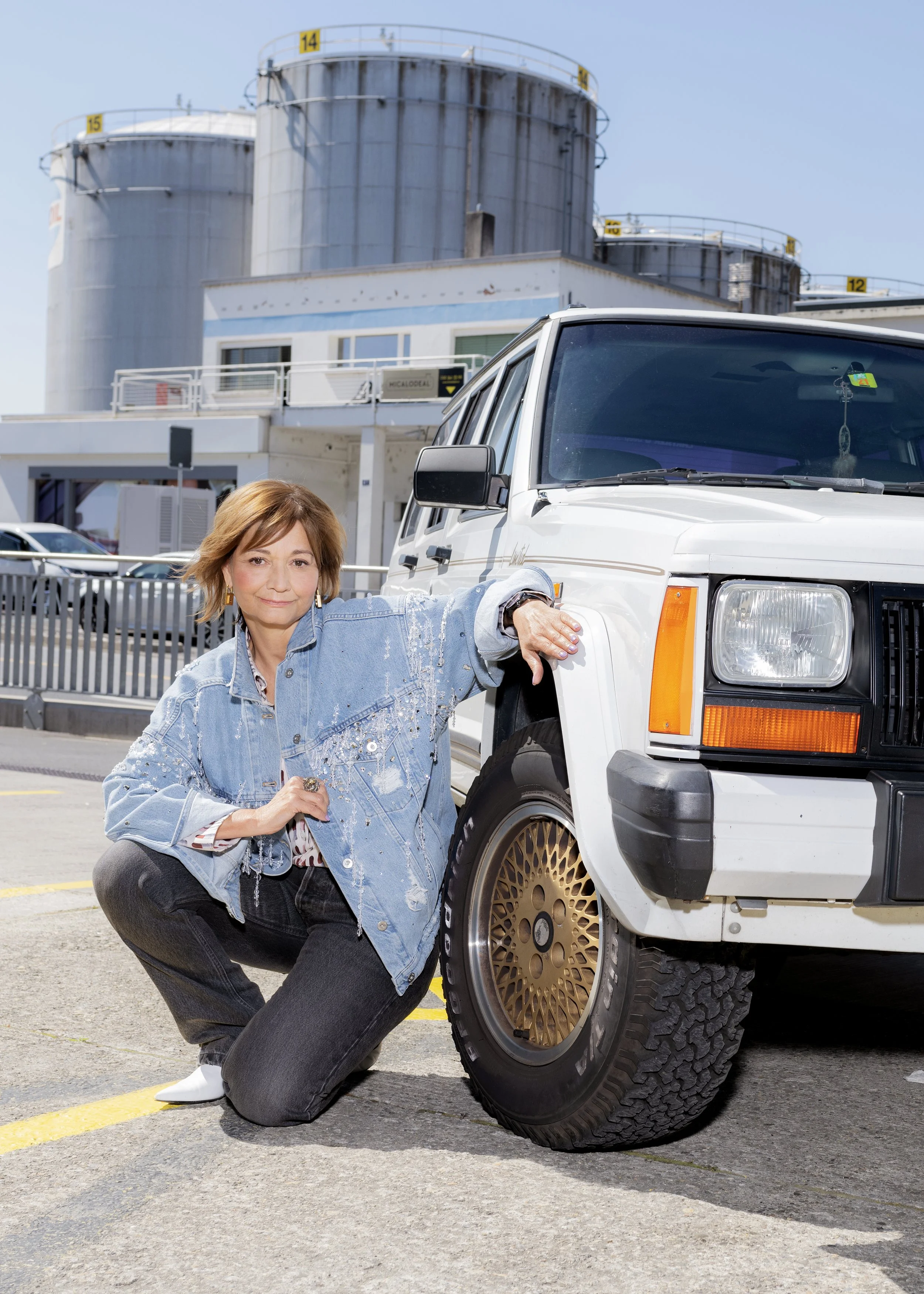
Sylvie Fleury (*1961) is a contemporary Swiss artist whose installation, sculpture, and mixed media work deals with our sentimental and aesthetic attachments to consumerist culture. Emerging in the 1990s, Fleury’s early “shopping bag” installations laid the foundations for a body of work that became as provocative as it is playful. Fleury heralded a new artistic trend by subverting the codes of consumption, creating an interplay between fashion and art, while interrogating the relationship between desire and fetishism.
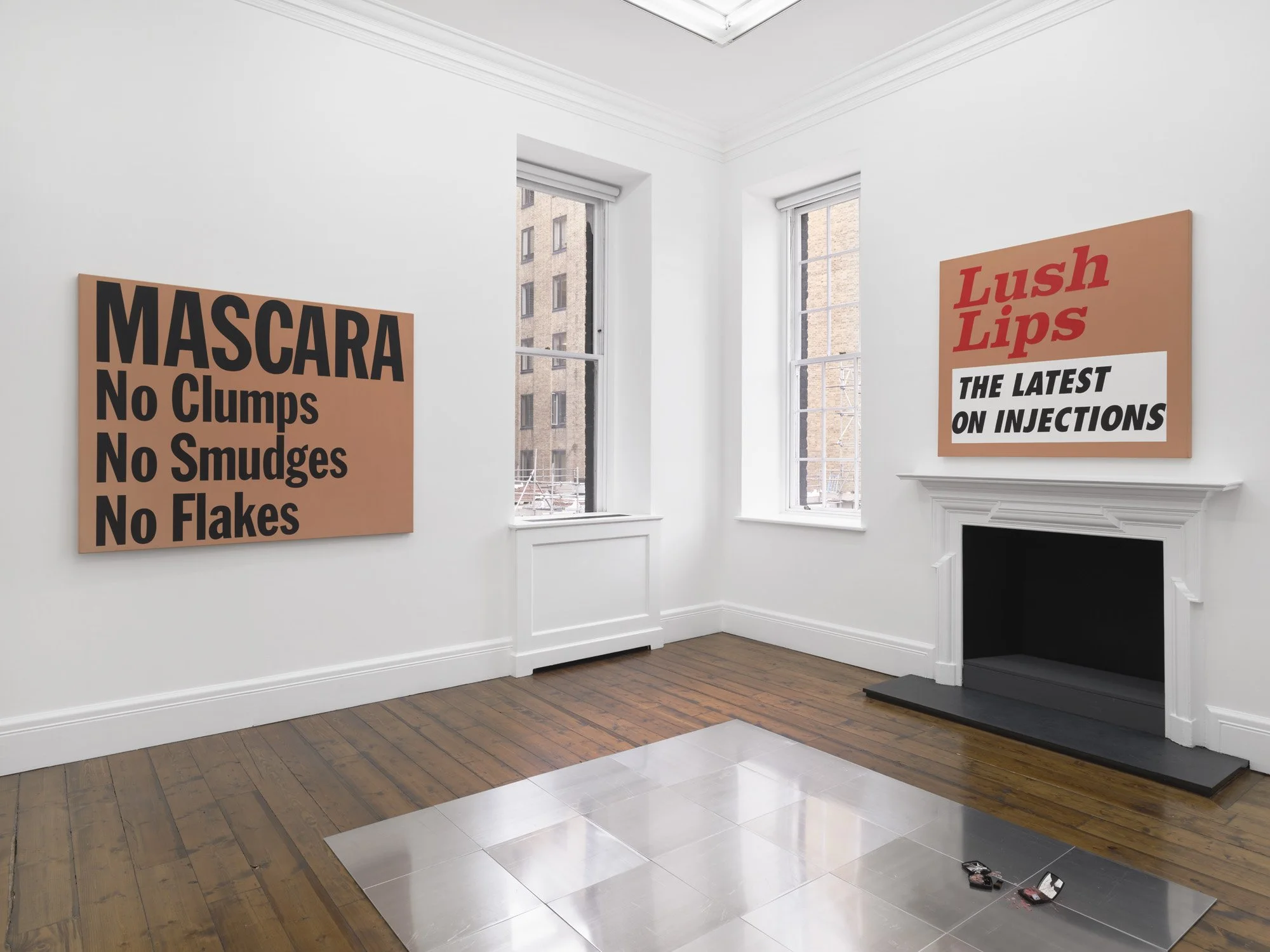
Fleury’s work exploits the ambiguity of superficiality, exploring subversions, paradoxes, truths and values via materialistic components she deems symptomatic of our epoch – particularly luxury clothing and accessories, makeup, race cars, icons of modern and contemporary art (from Marcel Duchamp to Piet Mondrian to Andy Warhol), magazines, television and media, and other objects drawn from everyday life. Employing common modern advertising strategies, including slogans, bright colours and attention-grabbing presentation, she examines the curious interchange between high-end luxury and trash culture, all the while manipulating the visuals of the modern economy. Moreover, she openly refers to the concept of fetishism in a manner that is largely ignored by modern visual culture.
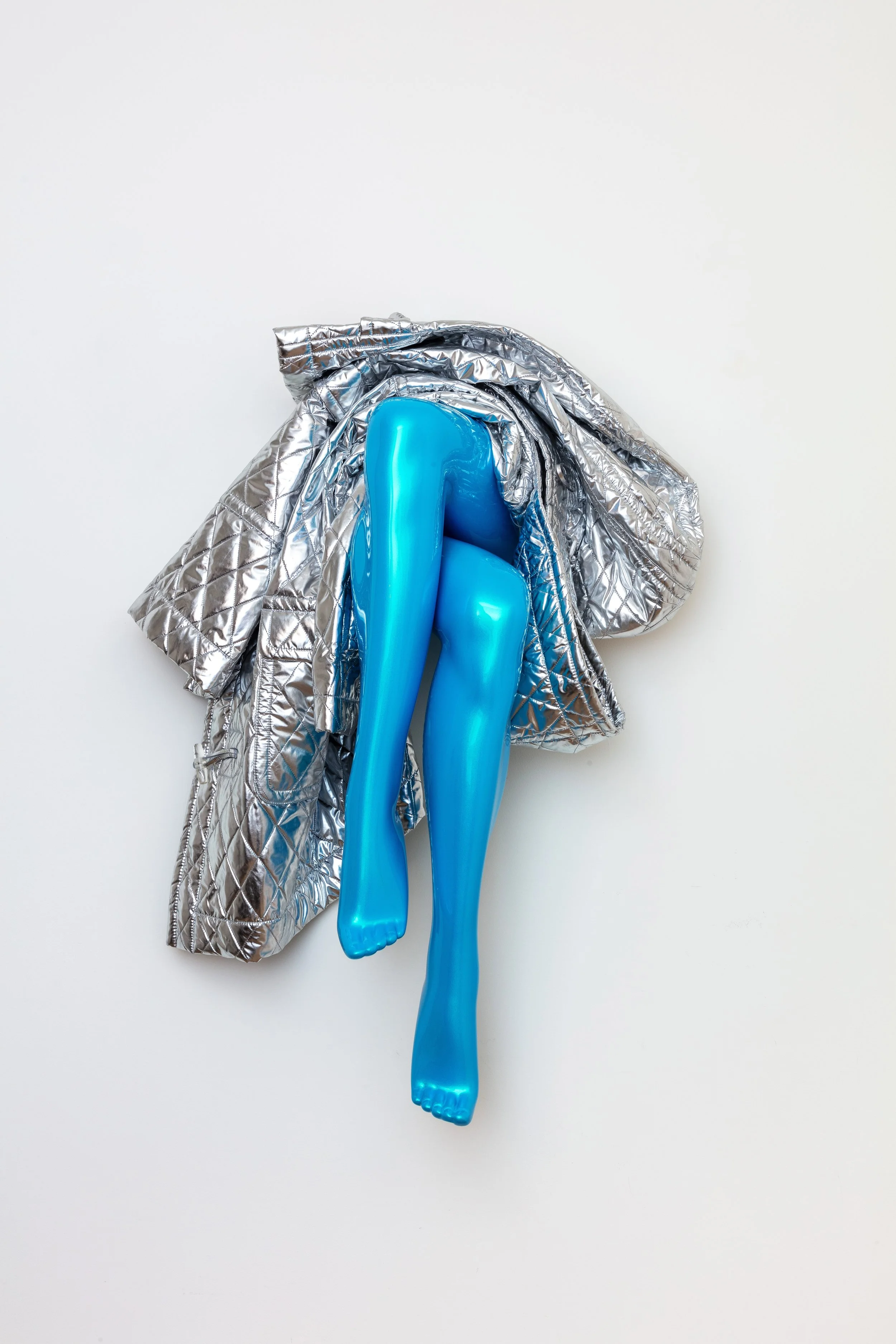
Trademark bronze sculptures of high heels and handbags are cast in chrome, radiating an atmosphere of excess while focussing on the seductive superficiality of fashion, advertising and design. Re-appropriating items and slogans from high fashion and its dedicated mass media, as well as re-appropriating ideas from high art, enables Fleury’s deft critique of these subjects in challenging the viewer to re-think their views on both fashion and art. Her attention to the banal accoutrements of consumerism pokes fun at our consumption of such objects; and the items take on a cheeky double meaning as artworks, being equally banal in nature, and yet more seductive through their association with the luxury of the art market and museum or gallery space. Her oeuvre reflects and anticipates her epoch as much as it participates within it, thus lending her work a Warholian wit and ambiguity.
If irreverence characterizes much of her work, she just as often shows her detailed knowledge of recent art history, embracing, re-appropriating, and satirising work from key artistic movements and artists, such as Duchamp, Mondrian and Warhol, modernists Daniel Buren and Donald Judd. Intriguingly, Fleury reserves her satirical approach for male artists, probing the grandiose machismo of modern art. Her commentary on gender politics works two ways, through both the art market and the relentless consumerism of our era.
_____________________________________________________________________________________________________
Sylvie Fleury (*1961, Geneva) lives and works in Geneva. Selected solo exhibitions include Kunsthal Rotterdam (2024), Kunstmuseum Winterthur (2023), Pinacoteca Agnelli, Aranya Art Center and Bechtler Stiftung (all 2022), Kunstraum Dornbirn, the Instituto Svizzero, Rome (both 2019), Villa Stuck, Munich(2016), Centro de Arte Contemporaneo, Malaga (2011), MAMCO, Musée d’art moderne et contemporain, Geneva (2008–2009), the Mozarteum, Salzburg (2005), ZKM, Museum für Neue Kunst, Karlsruhe, Le Magasin-Centre National d’Art Contemporain, Grenoble (both 2001), The Museum of Contemporary Art Chicago (1995). Selected group exhibitions include Migros Museum für Gegenwartskunst, Zürich (2022/2013), Jeu de Paume, Paris (2020), Grand Palais, Paris (2019), Kunsthaus Zurich (2018), Museum für angewandte Kunst, Frankfurt (2017), Museum Haus Konstruktiv, Zurich (2016), Belvedere, Vienna (2012), Städtische Galerie im Lenbachhaus, Munich (2010), Chelsea Art Museum, New York (2007), PS1, New York (2006), Collection Lambert, Avignon (2003) and Museum Ludwig, Cologne (2000).

Hi Sylvie, I would like to start from the beginning and ask you if you were exposed to art during your childhood?My father had a friend who owned a gallery and in the 70s he was showing a French artist called Labisse. I still have one of those prints.
Do you remember your first fashion encounter? What was it like?Hard to know for sure—maybe looking inside my mother’s Kelly bag, which later became a sculpture, or trying on her high heels and sunglasses. A bit later, in the late 60s, the bell bottoms and hippie style I discovered in Saint-Tropez made a strong impression. So did the movie Barbarella, with Rabanne clothing.
For years, you worked under the pseudonym Sylda von Braun, the name of one of the engines in the
Ariane rocket and a reference to the character Natacha von Braun in Alphaville by Jean-Luc Godard.
What kind of work were you making under this sophisticated cover?
In those days, I was mostly partying with friends. Sometimes we’d find houses about to be demolished and turn them into playgrounds—parties outside, fireworks inside. I drove a white Lada station wagon that looked like an ambulance, wore a doctor’s blouse with white stilettos, punk hair, and safety pins everywhere. Being a punk in Switzerland felt superficial, but for me it was a stage—probably where I started doing performance without even realizing it.
Around then, I opened a black gallery in Geneva with no name. We called it c/o. That was when I became more aware of artists and galleries in Geneva, though I didn’t really identify with them. Our first show featured obscure graffiti from New York—hardly the kind of thing that brought us closer to the local art scene. We were closer to squatters than to art lovers.
A few years later, with my friend John Armleder, I went to the Fridericianum in Kassel for Schlaf der Vernunft. There I saw Olivier Mosset stretching a massive yellow monochrome, and Jeff Koons dusting one of his famous Rabbits. I think that’s when I decided I wanted to be an artist.
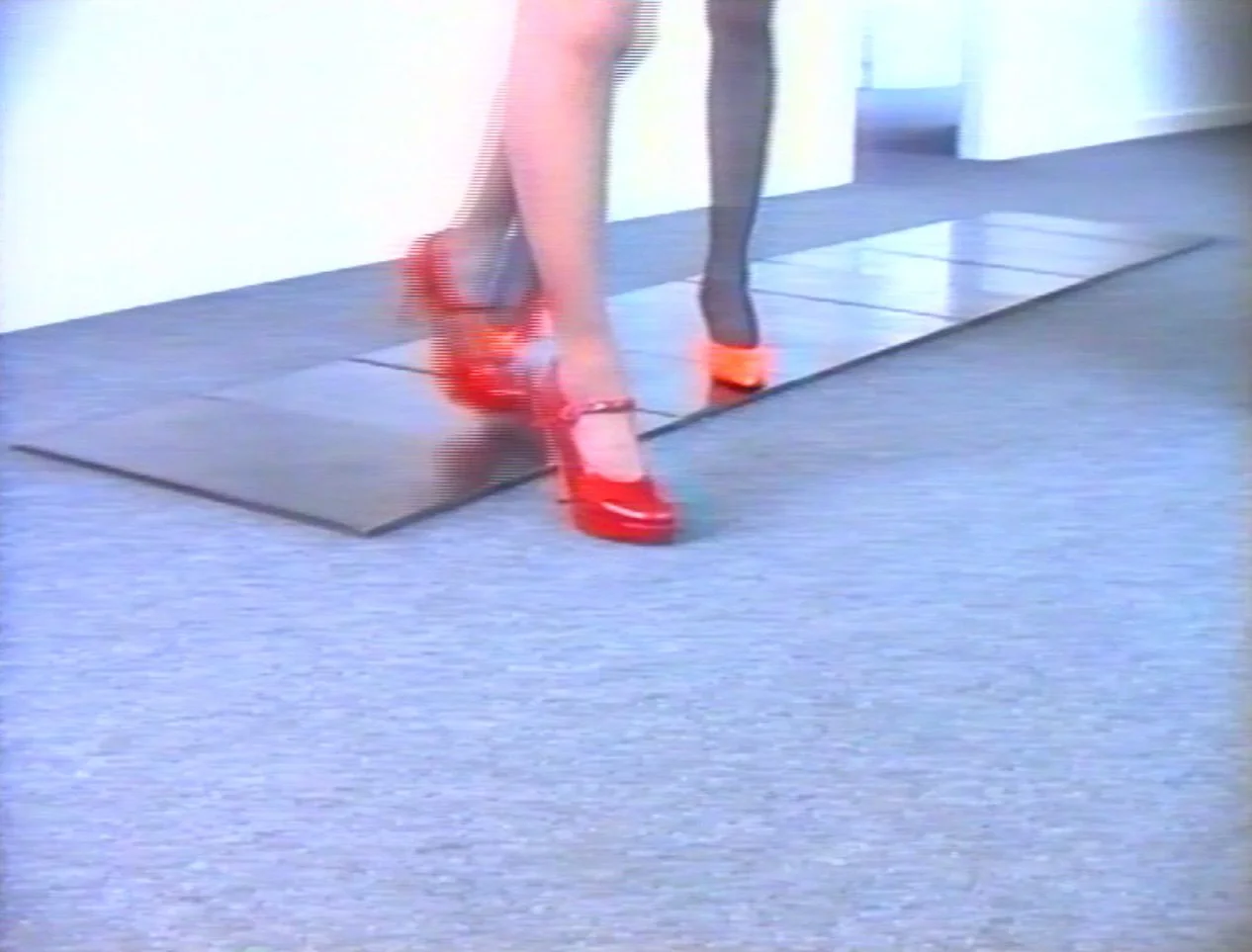
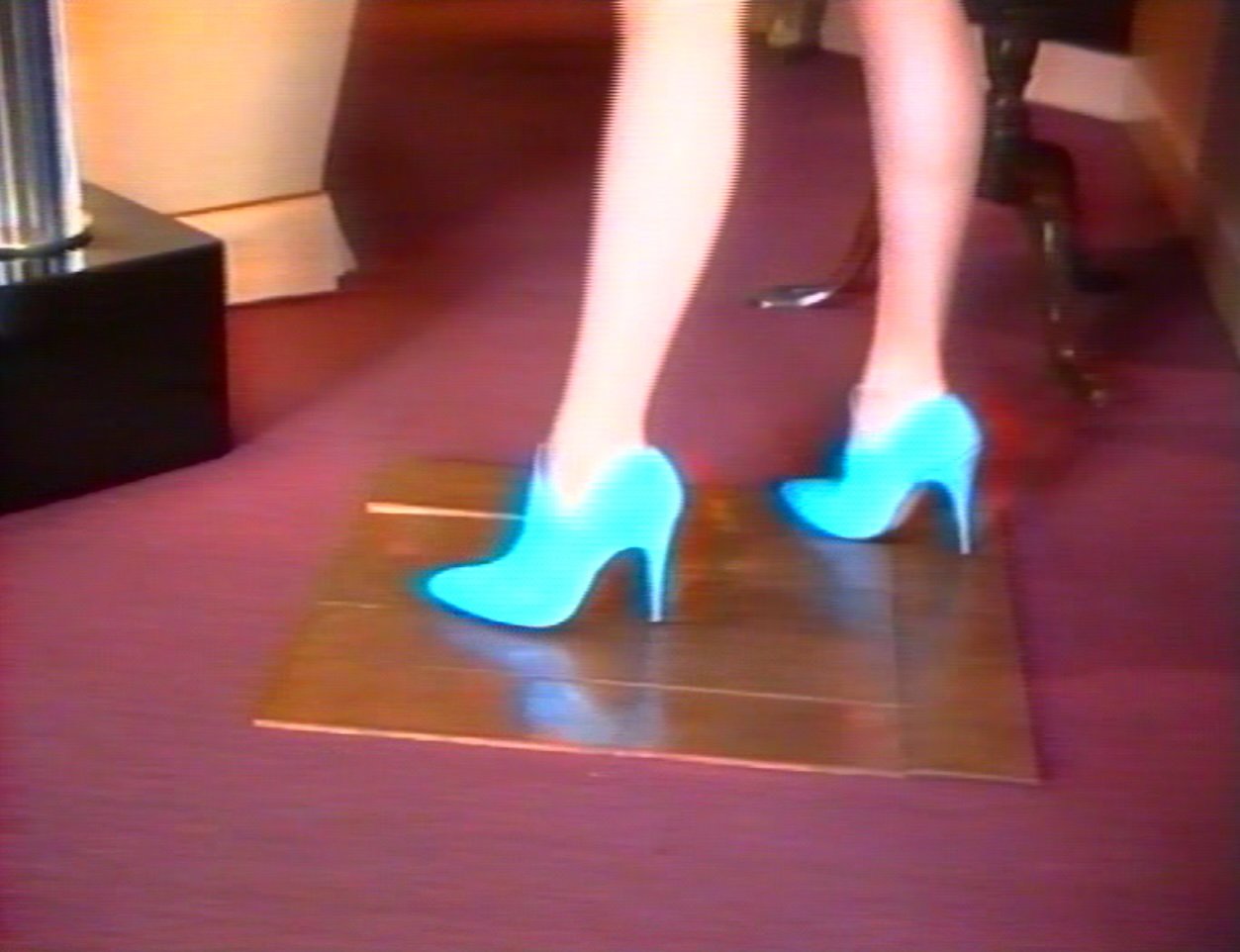
You were invited by your friends John Armleder and Olivier Mosset to participate in a group exhibi-
tion at Galerie Rivolta in Lausanne on December 17, 1990. This was the first time you exhibited under
your real name, with a piece made of shopping bags. Titled C’est la vie, it referenced the Christian
Lacroix perfume placed inside one of the bags. Do you remember how it all happened back then and
how it shifted the motion of your career?
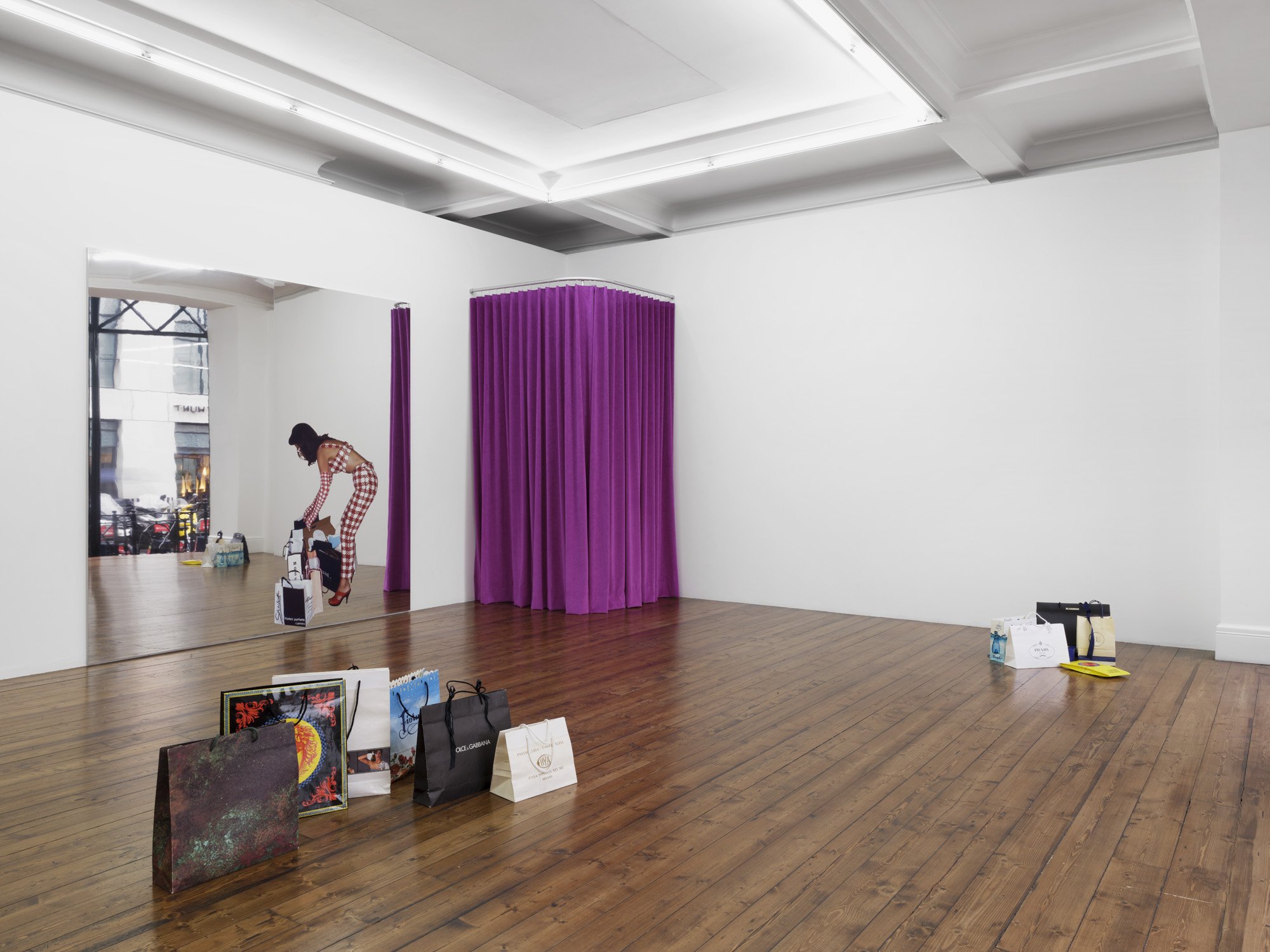
Yes, that was the first time I showed a piece in a gallery. Being friends with John and Olivier, I often went along to their shows. While they were working, I would go shopping and bring the bags back to the gallery. Seeing those bags sitting between Olivier’s monochromes and John’s furniture sculptures, I started fancying the idea of showing them as pieces.
One of the themes in your practice is the complexity of desire. Rhona Lieberman said, “The only cure
for desire is possession.” How do you engage with the concept of desire, and how would you articulate
your understanding of it?
Desire is tricky—it’s always somewhere between what you want, what you imagine, and what you can’t ever get. Possession is boring. Desire keeps moving. That’s the interesting part.
Can you tell the story of the origins of the first Road Test series?I was friends with the publisher of an edgy fashion magazine. The title “beauty editor” sounded great, so I accepted when they hired me. Soon a DHL box arrived, filled with the latest shades of cosmetics. Wondering how to present them for the magazine, I had the idea of taking them for a ride in the gold Buick I used to drive. I found an empty parking lot, threw the items on the asphalt, and drove over them. Then I took my old SX-70 Polaroid and photographed each little crash scene. Later came the Crash Tests: large metallic monochromes that I would literally drive into with a car.
In an interview with Sarah Cosulich, you mentioned your belief that everything is already out there.
You create through encounters with objects and situations, offering ready-mades with new narra-
tives—from an eighteenth-century painting to a television commercial. The story behind your perma-
nent neon installation Eternity Now at The Bass in Miami is fascinating. Could you share how that
piece came about?It’s a very frustrating approach. I try to understand day by day the balance between the shadows, the lights, the colours, the forms, and the aesthetics. Every day I arrive at the studio in the morning, and I draw all the time.
The Bass Museum invited me to do an outdoor performance while their building was being restored. On the flight to Miami, half-asleep, I was browsing the in-flight shopping magazine. There was an ad for a new Calvin Klein perfume called Eternity Now. It became instantly clear: ETERNITY NOW had to be a Miami-style neon on top of the Bass.
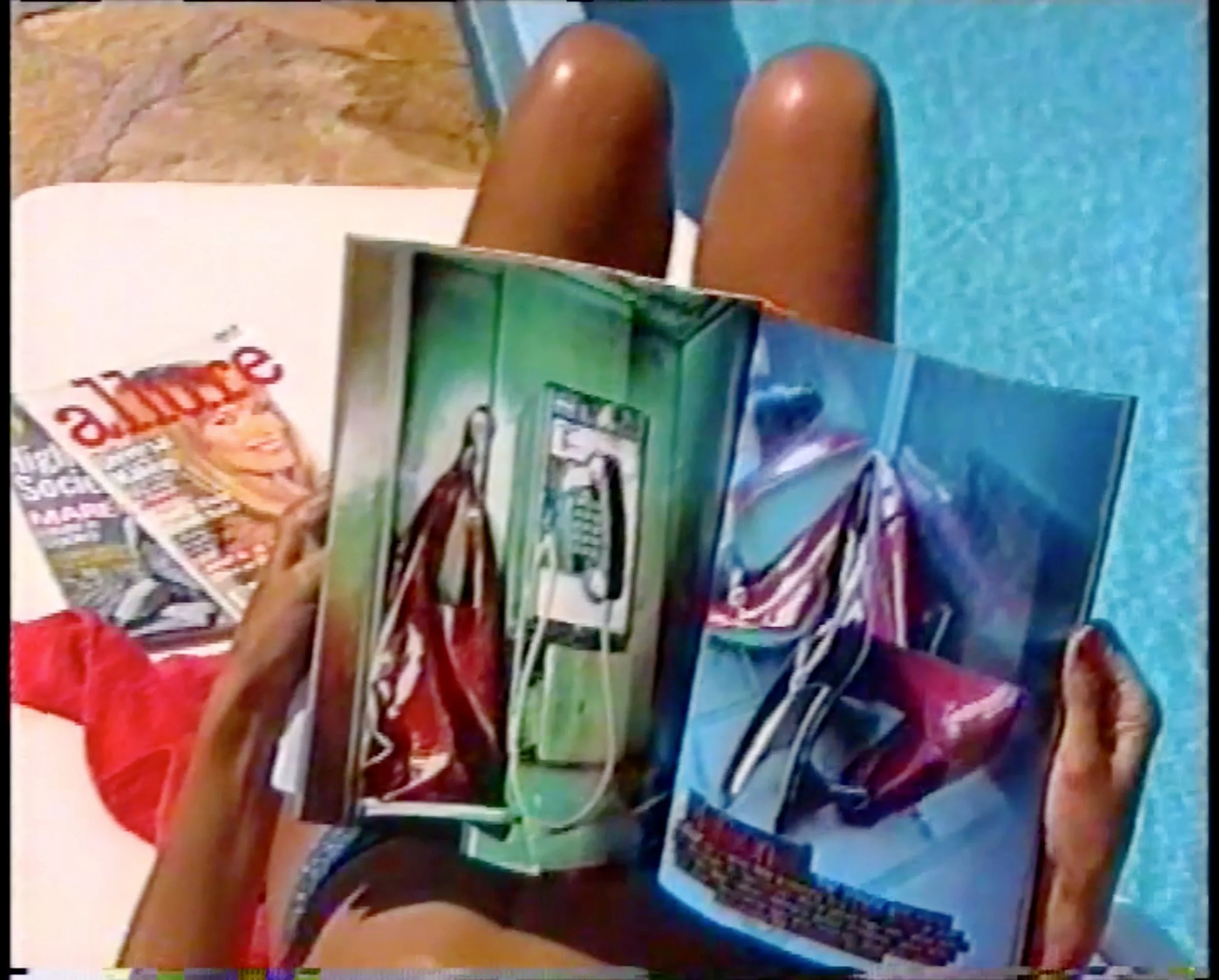
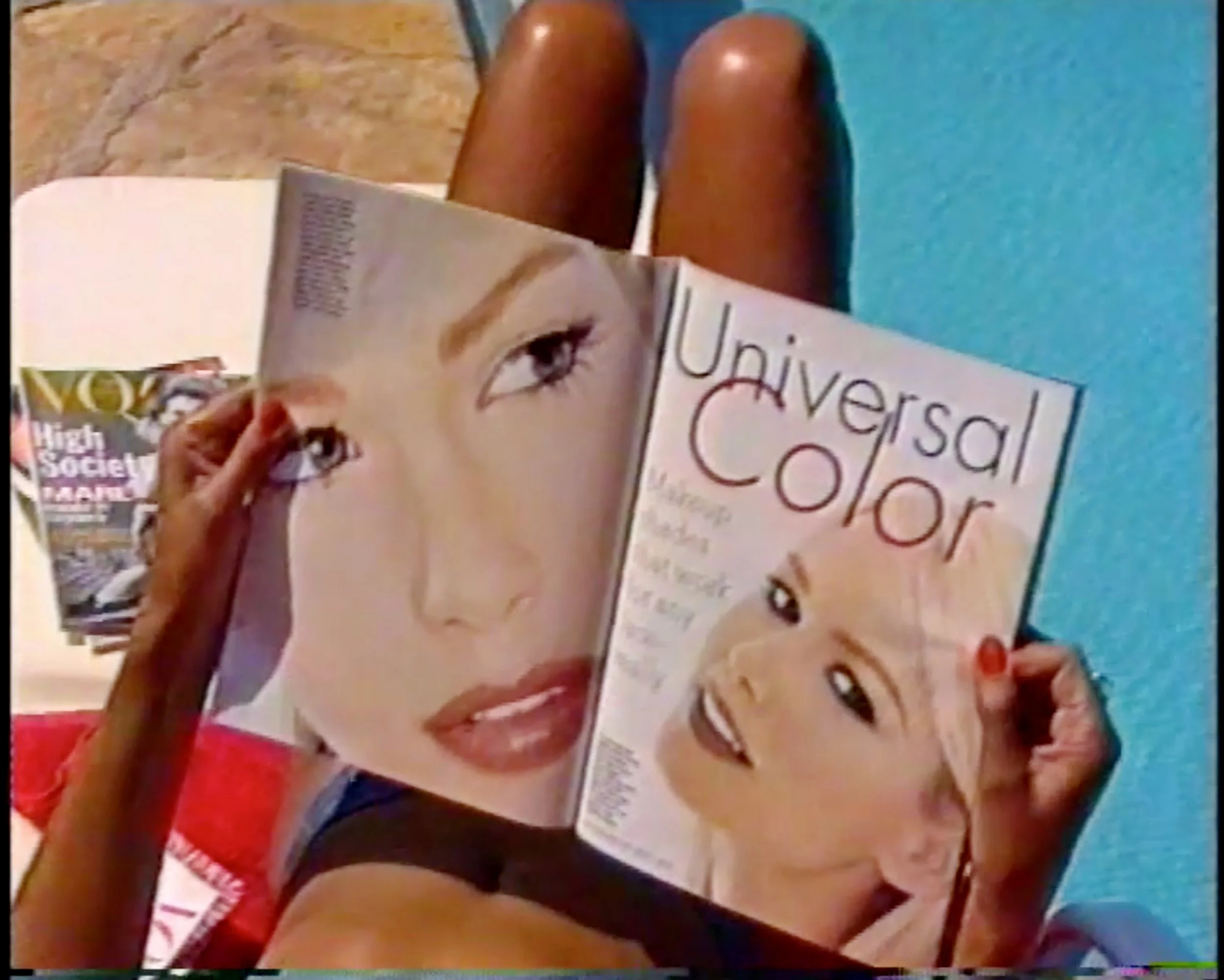
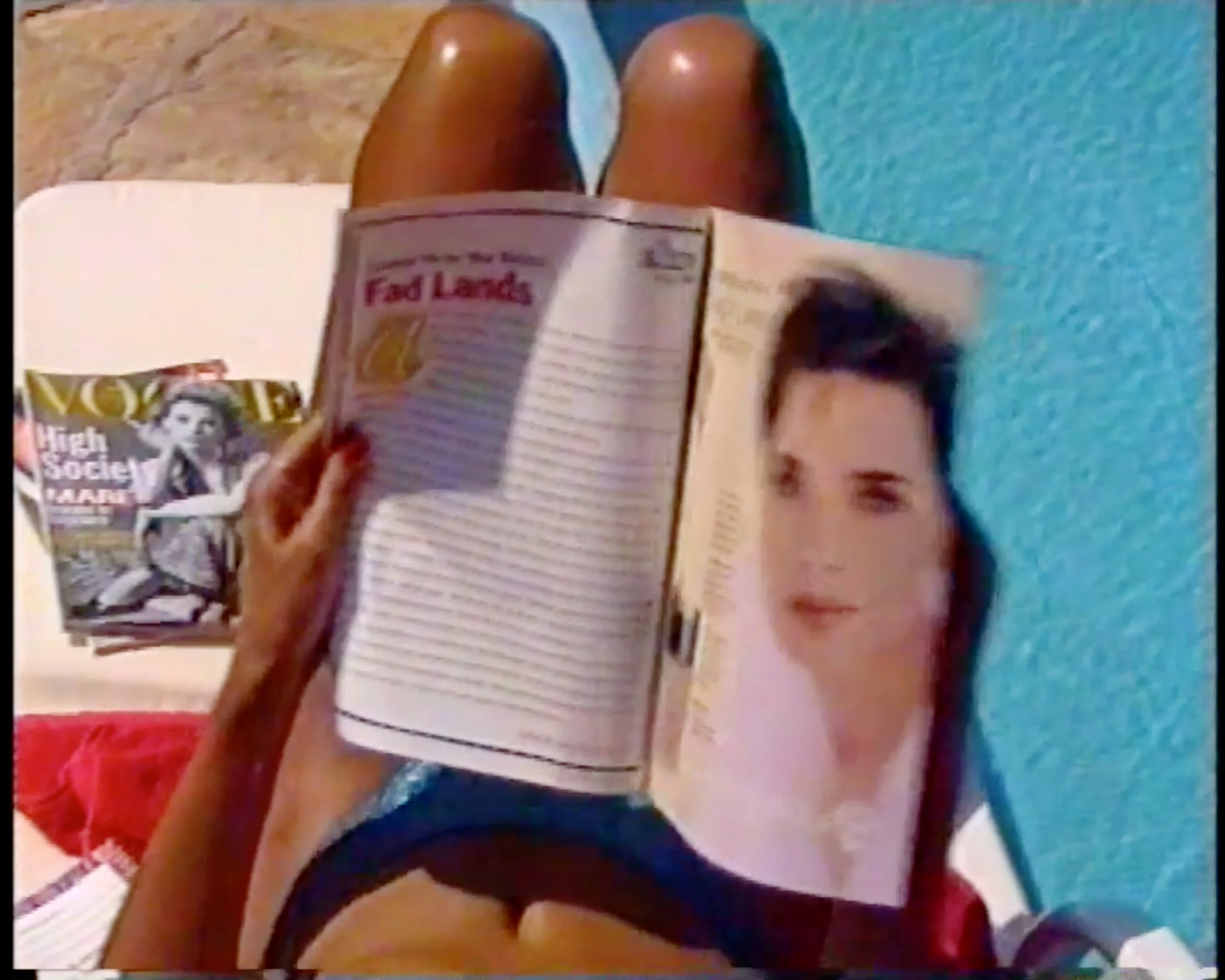
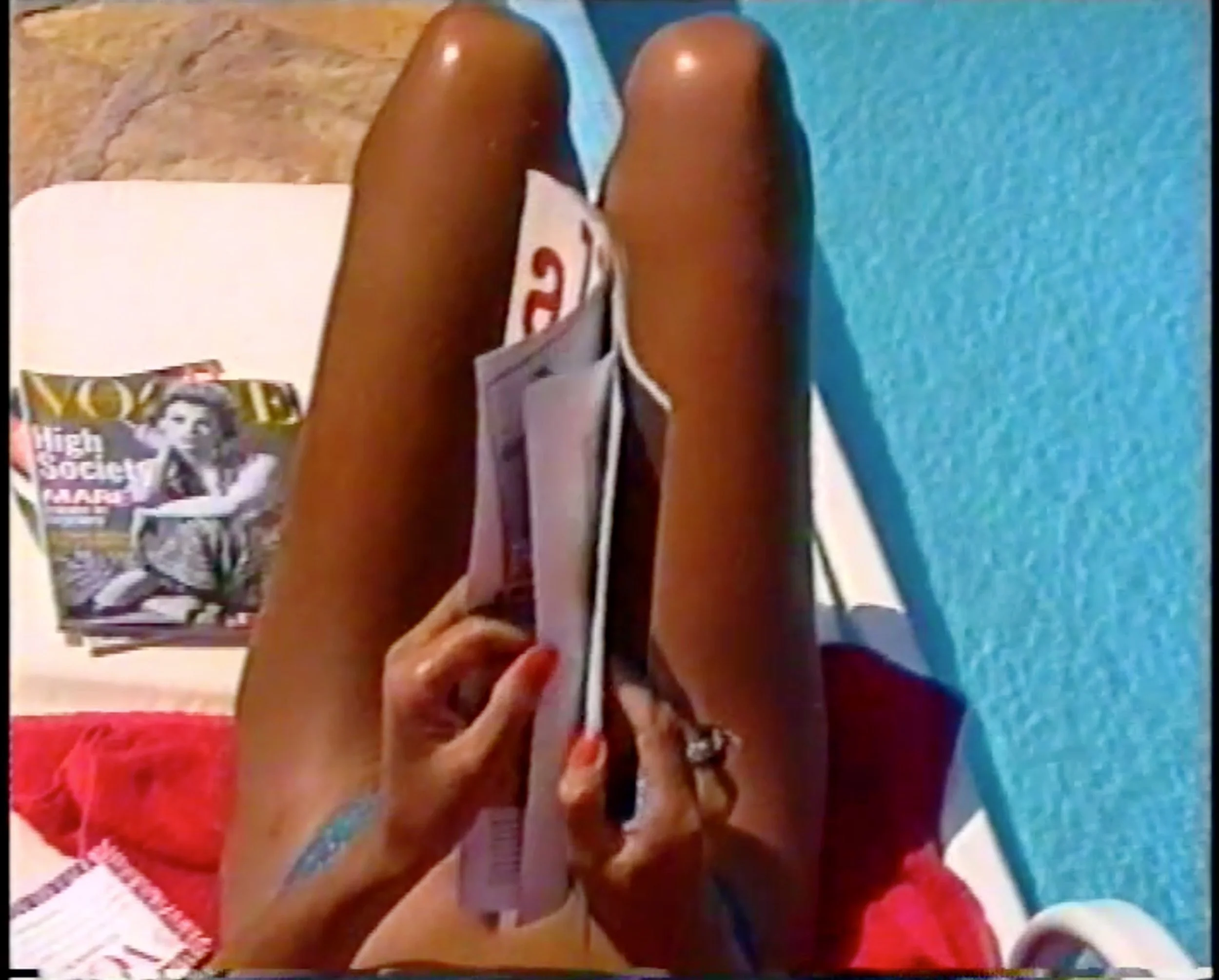
What is your relationship with high-speed vehicles—cars, rockets, engines—as well as moving images? How significant is pace and movement in your work?I’ve always liked engines because they’re both dangerous and glamorous. They seduce you, but they canalso kill you. Cars, rockets, engines—they’re like sculptures in motion. And films? They’re just another way of accelerating or slowing down time. Movement is adrenaline, but it’s also hypnosis.
You often explore contradictions and dualities, like a mirror that reflects something beyond itself. Do you see everything as having two or more directions? How do you situate yourself within constant flux and change? Do you need to be quick to hunt the now and the new?Everything is already two things at once, minimum. I don’t chase the now—it usually trips me on the way. Flux is natural, contradictions are where the fun is.
How important is intuition to you? Do you follow specific strategies in your work, or are you guided by feelings?I do both. Yes to all.
In relation to the piece Camino del sol, you said that beautiful songs always have great titles. Do you keep notebooks filled with names and phrases for future projects?No.
You once mentioned you’re interested in how ideas from your work cross into fashion and then return, influencing unexpected forms. The catalogue for your exhibition at the Pinacoteca Agnelli in 2022, TURN ME ON, took the form of a magazine, a kind of cultural fetish. In late June in Paris, the exhibition Balenciaga by Demna narrated the designer’s decade at the house. The catalogue was styled like a glossy fashion magazine. Did you see it?Yes, I liked how they chose a Cosmopolitan, slightly trashy style. Less glossy than Vogue or the others. My first museum catalogue at the Neue Galerie in Graz was an imitation of Vogue. In those days fashion and art had a more complex relationship. It’s a revealing development.
There’s a book called The Disappearance of Rituals: A Topology of the Present by Byung-Chul Han.
During the pandemic you played badminton regularly. Do you have daily rituals today—and do you
still play?
Truth is, I don’t have much perseverance except for ideas. At the moment, I’m stand-up paddling.
Your work seems to play with the world of now, using the aesthetics of beauty and fashion to construct
and deconstruct value. Am I correct in that interpretation?
Contrary to what one might believe, I don’t like labels… but “history of art” could be added to that interpretation.
Your practice explores freedom and the possibility of being without guilt. Is it hard to create and follow your own rules?I try not to follow mine too much.
In an interview, Truman Capote once said his ideal city was New York, because it’s the only place
where you can live four parallel lives without being discovered. You live in a quiet house in Geneva,
Villa Magica. How important is travel to you, and which cities do you always return to?
I’m unfaithful and need change—though I always return to Villa Magica. I need magic fifteen minutes from an international airport. And wherever my friends are.
Sound is an important element in your work. How does the present moment sound?Like someone revving an engine with a broken muffler, mixed with a meditation gong. Both at the same time.
How do you imagine the future?Glitter, crashes, and déjà vu.
But for now, I’m working on my exhibition at Sprueth Magers - New York opening early November and my performance at PERFORMA 2025.
Hans Ulrich Obrist often asks artists what advice they would give to a younger generation. What would you say to a young artist? Anything you’d like to add that I haven’t asked?Don’t listen to any advice.
Protagonist: Sylvie Fleury
Author: Dessislava Pirinchieva
For Emergent Magazine, Issue 14
Special thanks to Karma International and Mr. Diego Sanchez
October 2025, worldwide.